Ocarina Astery Gold Drop
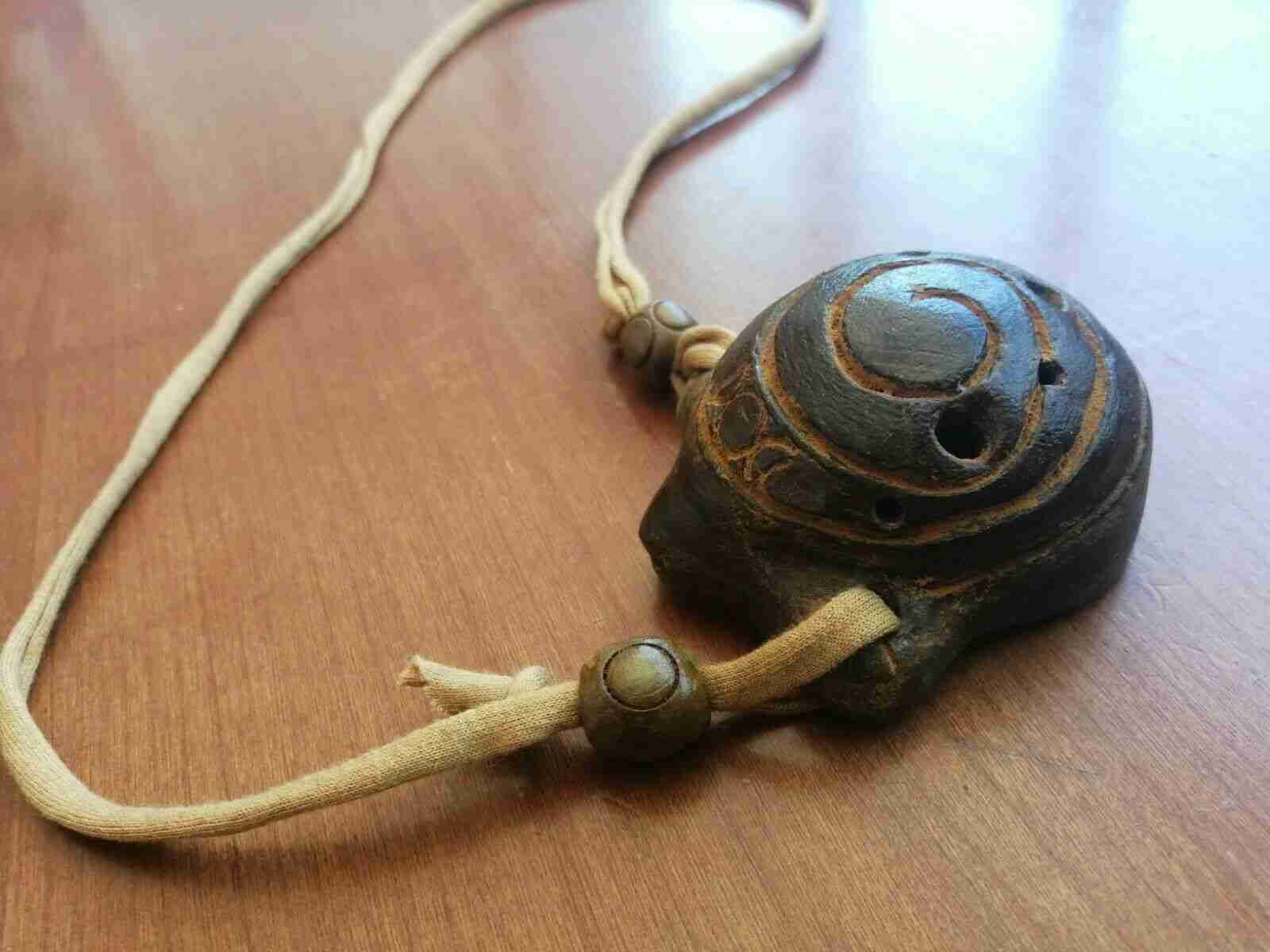
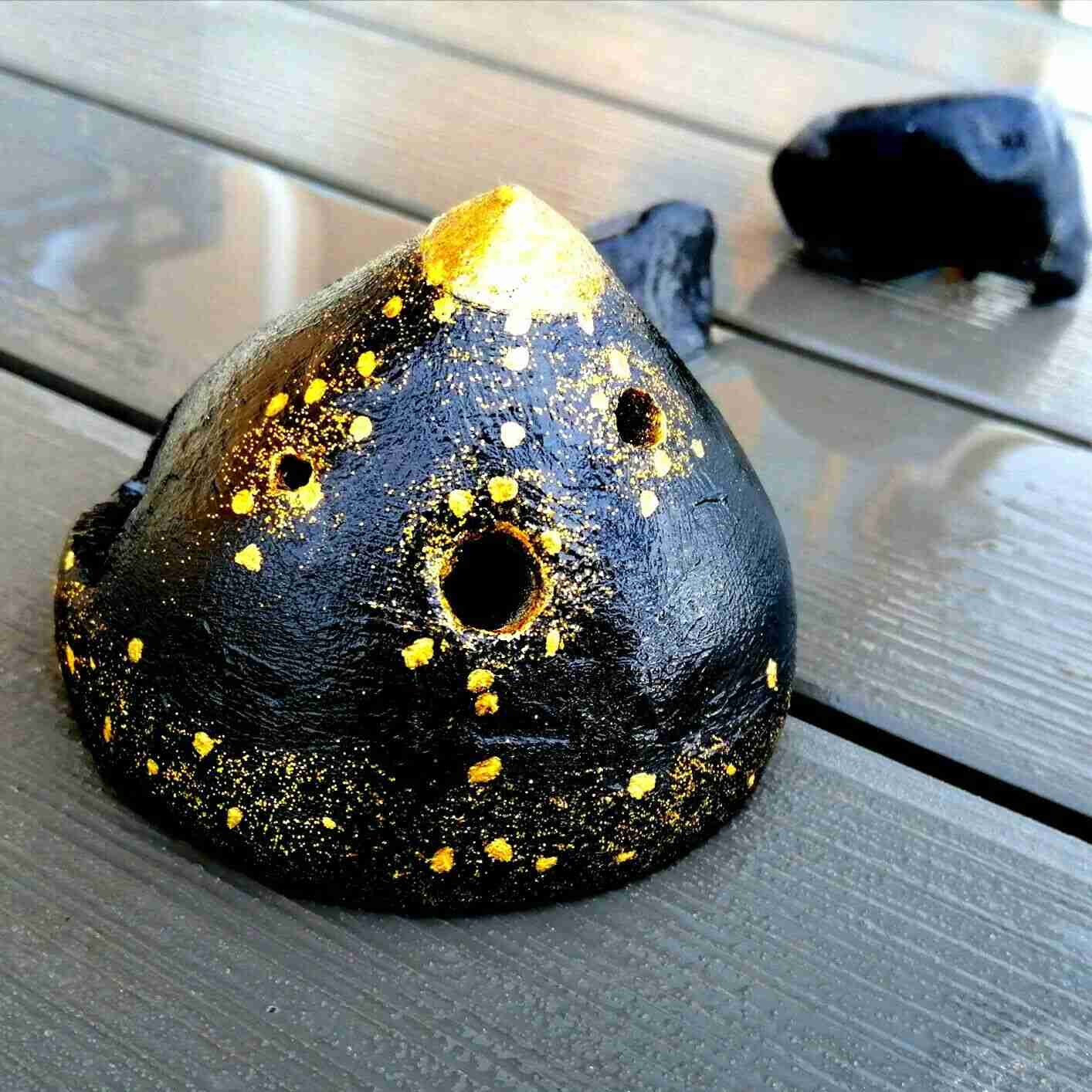
Ocarina Astery Black Gold Drop Pentatonic Low A3 Terracotta Okarina Astery Black Gold Drop Handmade by Davide laufeyson & Michael Scorpions This Beautiful Ocarina is made of Terracotta Branded and Designed and Decorated with Alchemic Fire Spharmament of black metallic and gold of merging by drop The paint is atoxic and of high quality with Egyptian and shamanic techniques High quality materials and Entirely handmade, A3 Pentagonal Ocarina Astery Golden Drops Has 5 tone holes making 6 notes of smaller pentatonic scale, the same scale native American flutes are tuned with the basic A3 note. It takes a little time to practice the right breathing and repays with a nice precise sound.
The gooseph or Okarina is an Italian-shaped ovoid instrument built in terracotta; such aerophones, commonly known as arghilofoni, are very ancient instruments and widespread in numerous archaic civilizations and has a sound neither too acute, nor too obtuse and strong. The standard goose used in Western music was invented in Italy, in Budrio, during the mid-19th century by Giuseppe Donati. Its elongated ovoid shape resembles the profile of a private goose of the head: the name is derived from ucareina, oca diminutive in Bolognese dialect. ocarine They are native American styled Sciamaniche and are very intuitive to play and create melodies, without the need for musical theory. With practice and some tricks we learn quickly. Ideal during Rapé and shamnic medicines of wild amazonia forest, ideal to meditate and to be accompanied by a shamanic drum. For more information, please feel free to contact us
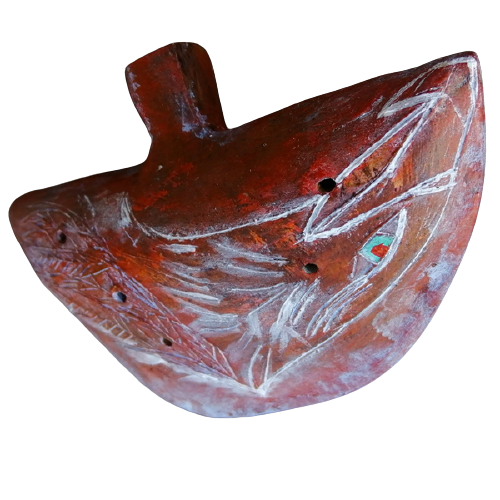
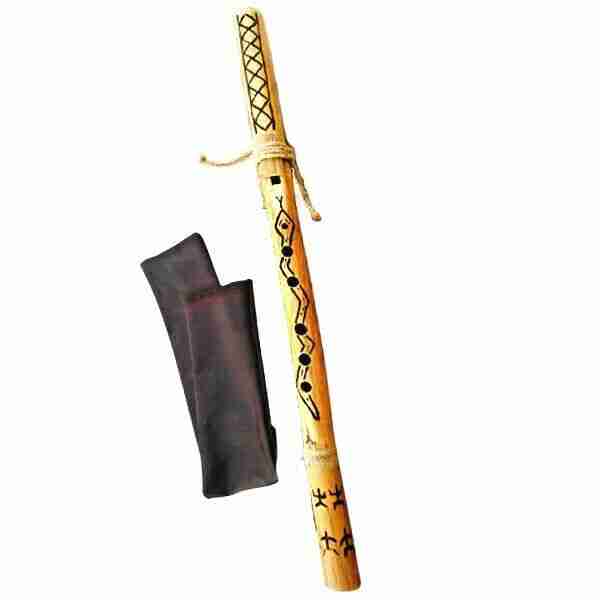
Since it is handmade, every Ocarina will be slightly different from each other.The photos are illustrative, you are buying individual artworks made for you.
History of OCARINA
The goose is one of the oldest musical instruments in history: some Chinese specimens would go back to about 12,000 years ago. The gooseph was particularly important for the Mesoamerican cultures at least from 2500 BC and both Maya and Aztechi produced various versions of clay ocarines, The goose is a “globular flute”, being equipped with a round and closed resonance chamber; for this reason it is necessary to adjust the intonation by intervening on the number and size of the holes and on the volume of the resonance chamber, often delicate operations requiring expert hands and a careful ear. It is difficult to find the correct intonation by intervening on the diameter of the holes and the amplitude of the resonance cavity, and guarantees a poor flexibility in the modulation of the intensity of the sounds produced. during the mid-19th century by Giuseppe Donati[3][4]Its elongated ovoid shape resembles the profile of a private goose of the head: the name is derived from ucareina, oca diminutive in Bolognese dialect.[5]
According to the available sources, it seems that Donati invented goose in 1853, at the age of 17. But Donati did not limit himself to building a single size of paper: the new and winning idea was to build a family of large and small carnations among them. This was the first Buddhist ocarinist group, formed by Donati himself and some of his friends. This first group of winemakers began its activity in the early 1960s (it was initially called the I Celebri Montanari degli Apennines.[6]From 1869 to 1878 he was on tour - with considerable success - in Italy and in many European countries, spreading interest and passion for this instrument[2], so much so that some budries opened production workshops in Milan, Paris and London at that time[4]Between high and low, the ocarines spread further in the 20th century: in the United States they were even used as a pastime for the troops engaged in World War II.[7]Today, the ocarines are spread a little around the world: in addition to Italy, the goose has been used in some Austrian folkloric groups, South Tyrolean and Bavarian.[2], in addition to other countries including Korea, Japan, China, Peru, France, England, Hungary and the United States.The pictures in the description are purely indicative
Products guaranteed by KARMARANDO
For plant products, incense and powder products prepared at the moment, no refunds or refunds shall be made.
The
terms used The categories and tags do not suggest medicinal or recreational use of products, but only organize them according to their historical, scientific and social use.
The recipes are scientifically based.They do not encourage customers to repeat them, nor do they want to consume their products.
Our content have not been evaluated by the FDA or any professional medical authority: possible applications, dosage indications and warnings are described for educational purposes only, are personal speculation and do not constitute medical advice.
Products are sold as incense, soaps, resins, collector's botanical material and scientific research material.
They're not meant for human consumption.
To purchase our products you must be over 18 years old and not suitable for pregnant and/or breastfeeding women.
For more information on
KARMARANDO Visit
This page or read the latest news on
The BLOG